Textile Scaffold#
Global Instructor: Anastasia Pistofidou
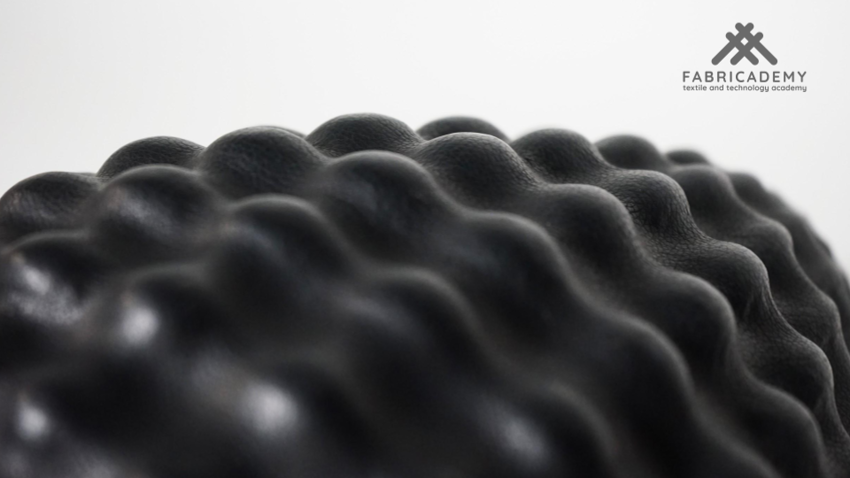
The Textile as Scaffold class explores the potential of textiles as structural frameworks that can shape, reinforce or grow composite materials. It positions textiles as programmable scaffolds that bridge craft, material research and digital fabrication. Participants investigate how textiles can function as structural systems with potential applications in architecture, product design and technical textiles. The module introduces techniques such as (bio)composite principles, crystallization processes, fabric formwork and material solidification. Through hands-on experimentation, participants explore how textile structures influence form, reinforcement and material behavior to create hybrid materials. They develop skills in 3D mold design and fabrication, in order to combine textiles with materials such as resins, binders, concrete, plaster, wood veneers or crystallized growths to produce both two- and three-dimensional systems.
Program outline#
- Technical textiles overview and applications
- Crystallization
- Textile formwork
- Concrete casting
- CNC Milling
- Composites
Tools/software#
- CNC milling machine, Laser cutter, 3D Printer
- Vacuum forming machine
- 3D CAD / CAM software: Rhinoceros, Grasshopper, Solidworks, Fusion360; RhinoCAM, FusionCAM
Materials#
| Material | Details |
|---|---|
| CNC milling | wood or plaster blocks and sheets, bio-degradable or re-usable foams, etc |
| Resins | polyester, epoxy, bio-resin |
| Binders | Gelatine, cornstarch, agar agar |
| Fabrics | nets, stretch fabrics, bleed fabric |
| Vacuum bags | specific for composites, or for clothing vacuuming |
| Casting materials | Concrete, gipsum, etc |
| Crystallisation | Borax, Rochelle salt, Potassium Aluminium Sulfate, Epsom Salt, Sugars |
Assignment#
- Produce small samples of textile composite. Compare and document their qualities.
- Design and create a fabric formwork to cast concrete or liquid marble into it.
- Design and create a scaffold of fibers to grow crystals on it
- Design and CNC mill a mold.
- Design and create a fabric composite deriving from a 3D mold.
- Design and create your own textile scaffold with an alternative technique of your choice.
- Participants need to select 2 out of 3 techniques and create their prototypes.
Evaluation and assessment#
Check the Assessment Criteria
References#
Fabricademy Tutorials - Textile Scaffold - Crystals -